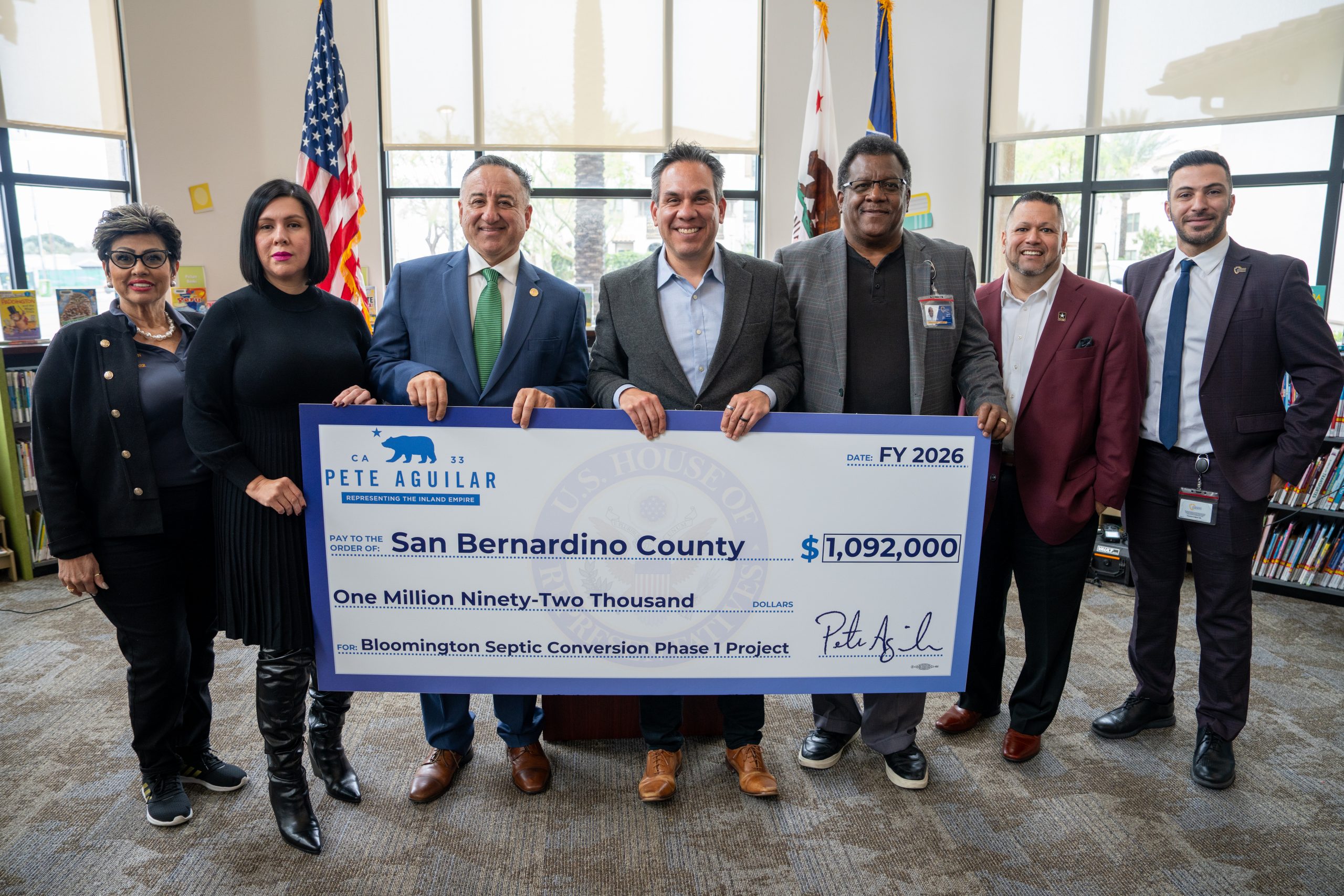
Supervisor Joe Baca, Jr. joined Congressman Pete Aguilar to announce a $1,092,000 federal investment secured for San Bernardino County’s Bloomington Septic Conversion Project. This critical funding will help install approximately 1,200 linear feet of mainline sewer along the Valley Boulevard corridor, extending to Alder Avenue, marking a transformative step in modernizing Bloomington’s wastewater infrastructure.
The upgrade from septic systems to sewer infrastructure will improve wastewater treatment, enhance public health outcomes, safeguard local groundwater resources, and create the foundation for long-term housing and economic opportunities in one of the County’s largest unincorporated communities.
“Bloomington is home to more than 17,000 residents, and strong, reliable infrastructure is essential to a community’s health, prosperity, and future success,” said Supervisor Joe Baca, Jr. “We are grateful to Congressman Aguilar for partnering with San Bernardino County and delivering this critical investment. This funding will help ensure better public health outcomes, protect our groundwater, and support long-term stability and opportunity for the families who call Bloomington home.”
“We all know how essential it is to have strong, reliable infrastructure — it’s what cities, counties and countries are built on,” said Congressman Pete Aguilar. “That’s why I’m so proud to deliver over $1 million for San Bernardino County’s Bloomington Septic Conversion Project. This grant is more than just an investment in sewage and water treatment infrastructure — it’s an investment in the community’s long-term housing development, public health and economic growth. Federal investments in projects for unincorporated communities like Bloomington are essential to ensuring that no Inland Empire resident gets left behind.”
The Bloomington Septic Conversion Project represents a significant public health and infrastructure milestone for the community and aligns with broader County efforts to modernize essential services in historically underserved areas.